Hours of service rules exist for a single reason: fatigue kills. FMCSA's HOS regulations set the legal boundaries on how long a commercial motor vehicle driver can drive and work before mandatory rest. The rules apply to every driver operating a vehicle with a gross vehicle weight rating of 10,001 pounds or more in interstate commerce — which means they apply to the trucks carrying your freight.
For carriers, HOS compliance is an operational discipline enforced by electronic logging devices and verified during DOT inspections. For shippers, HOS rules are the constraints that determine whether your freight arrives on time — because every detention hour at a dock, every loading delay, and every unplanned stop consumes time from a finite window that the driver cannot extend.
This guide explains the current HOS rules as they operate in 2026, the exceptions and flexibility provisions that experienced carriers use, the proposed changes under FMCSA review, and what shippers should understand about how HOS constraints affect their freight.
The Core HOS Rules for Property-Carrying Vehicles
The 11-Hour Driving Limit
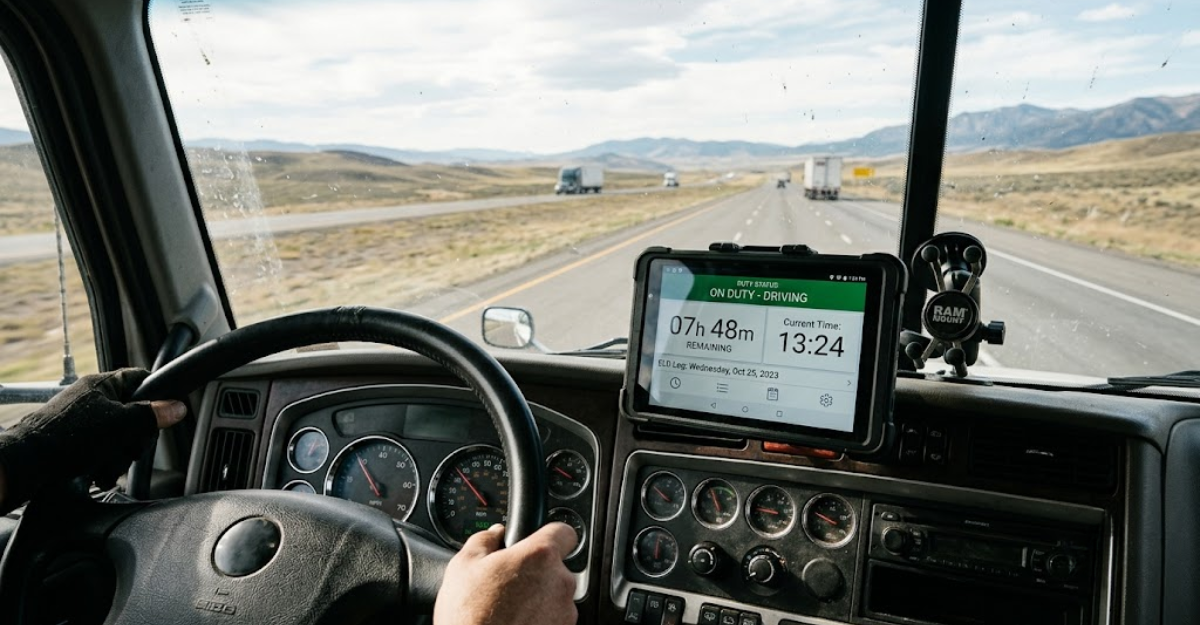
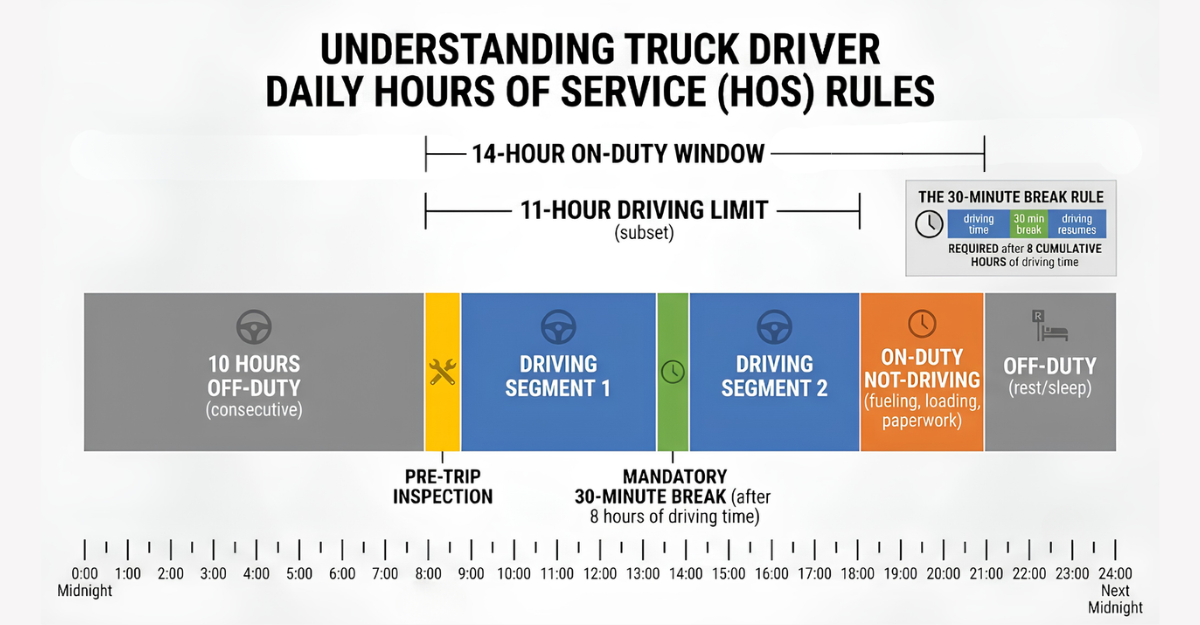
A driver may drive a maximum of 11 hours after 10 consecutive hours off duty. This is the fundamental constraint. Once a driver begins driving after a qualifying rest period, the 11-hour clock starts counting down. When it reaches zero, the driver must stop driving — regardless of how close the destination is, regardless of what the shipper needs, regardless of what the load is worth.
The 11-hour limit is a driving-specific limit. It counts only time spent behind the wheel with the vehicle in motion. Time spent on other on-duty activities — loading, unloading, fueling, waiting at a dock, performing vehicle inspections — does not consume driving hours. But it does consume something else.
The 14-Hour On-Duty Window
A driver may not drive beyond the 14th consecutive hour after coming on duty, following 10 consecutive hours off duty. This is the constraint that creates the most operational tension between carriers and shippers.
The 14-hour clock starts when the driver begins any on-duty activity — not just driving. If the driver's first activity of the day is a pre-trip inspection at 6:00 AM, the 14-hour window opens at 6:00 AM and closes at 8:00 PM. After 8:00 PM, the driver cannot legally drive, even if only 6 of the available 11 driving hours have been used.
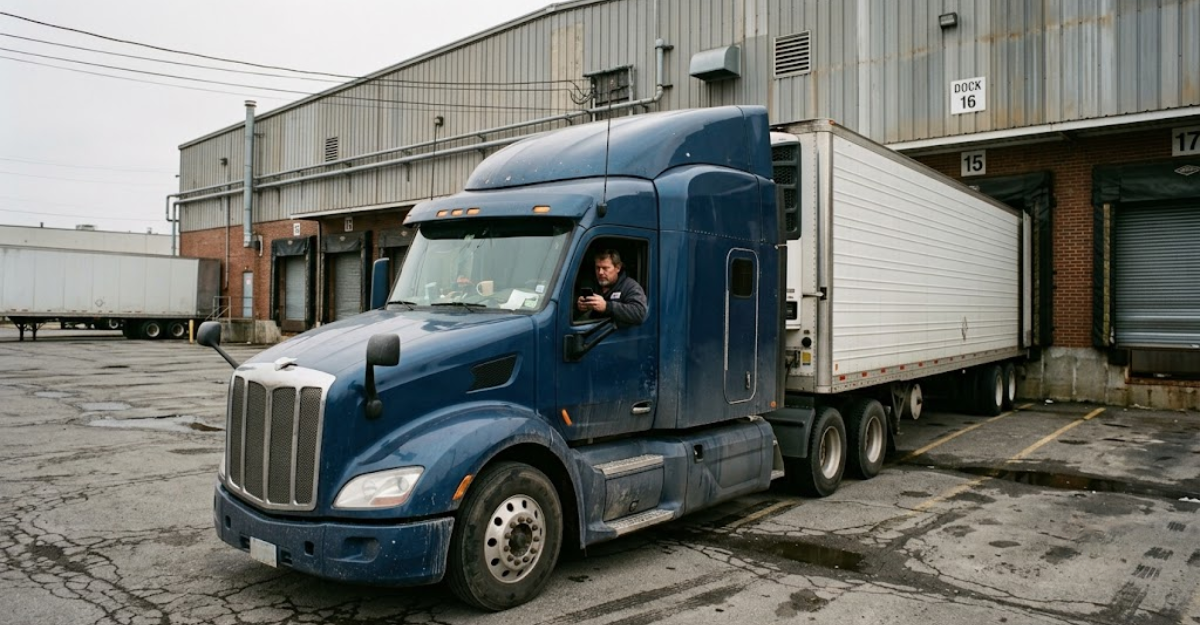
This is the rule that makes dock detention a capacity problem rather than merely a cost problem. A driver who arrives at a shipper's facility at 7:00 AM and waits 3 hours for a loading appointment that was scheduled for 7:30 AM has lost 3 hours of the 14-hour window — hours that cannot be recovered. Those 3 hours reduce the driver's available driving range by roughly 150 to 180 miles. If the delivery destination is 600 miles away and the driver planned to arrive that evening, the detention at origin may make a same-day delivery impossible.
The 14-hour window does not pause. Off-duty time taken in the middle of the day does not stop the clock (with one exception — the sleeper berth provision, discussed below). Once the window opens, it runs continuously for 14 hours and then closes.
The 30-Minute Break Requirement
A driver may not drive after 8 cumulative hours of driving without taking a consecutive 30-minute break. The break can be off-duty time, sleeper berth time, or on-duty not-driving time (such as fueling or loading). The key word is consecutive — three separate 10-minute breaks do not satisfy the requirement. It must be a single uninterrupted 30-minute period.
For most drivers, the 30-minute break fits naturally into fueling stops or meal breaks. For shippers, the relevant implication is that a driver who has been driving for 7 hours and 45 minutes cannot legally drive the remaining 15 minutes to your dock without first taking the 30-minute break. If the shipper's delivery appointment is tightly scheduled, the 30-minute break can create a timing conflict that the driver cannot resolve by driving faster.
The 60/70-Hour Limit
A driver may not drive after being on duty for 60 hours in 7 consecutive days (for carriers that do not operate every day of the week) or 70 hours in 8 consecutive days (for carriers that operate daily). This is the cumulative limit — it constrains total on-duty time across multiple days rather than within a single day.
The practical effect is that a driver who has been operating at maximum capacity for several consecutive days will eventually run out of available hours before the weekly cycle resets. A driver running 14-hour days will exhaust the 70-hour limit in 5 days. The driver must then take a 34-hour restart (discussed below) or wait for hours to "fall off" the 8-day rolling window.
The 34-Hour Restart
A driver can reset the 60/70-hour clock by taking at least 34 consecutive hours off duty. After a qualifying 34-hour restart, the cumulative hours reset to zero and the driver begins a fresh 60- or 70-hour cycle. There is no limit on how many restarts a driver can take.
The 34-hour restart is the mechanism that allows drivers to recover from a heavy week of driving. For carriers, managing restart timing is a scheduling discipline that determines whether a driver is available on Monday morning or is still in a restart period.
Exceptions and Flexibility Provisions
Sleeper Berth Split
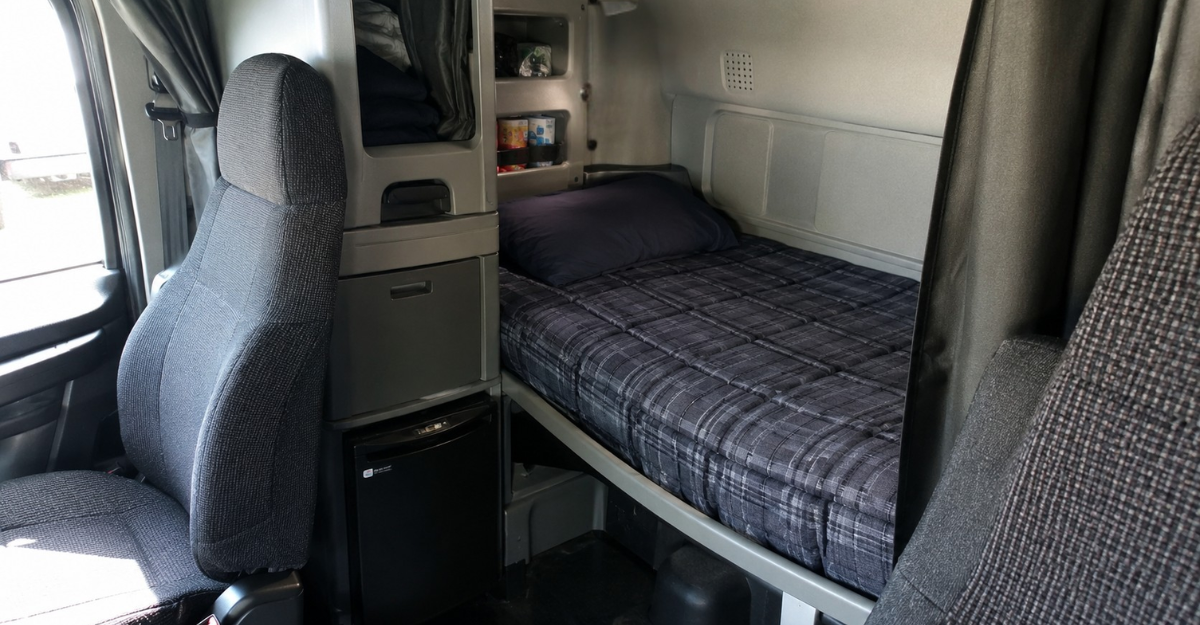
Drivers using a vehicle equipped with a sleeper berth may split their required 10 hours off duty into two periods, provided the two periods together total at least 10 hours, one period is at least 7 hours in the sleeper berth, and the other period is at least 2 hours either off duty or in the sleeper berth. The key benefit of the split is that the shorter period pauses the 14-hour window — the only mechanism in the HOS rules that allows the 14-hour clock to stop.
A driver who takes a 3-hour sleeper berth break during the day effectively extends the 14-hour window by 3 hours. This allows drivers to work around traffic patterns, dock delays, or appointment timing by resting during unproductive periods and driving during productive ones. FMCSA is currently reviewing a proposed expansion to allow 7/3 splits (in addition to the existing options), which would provide additional scheduling flexibility.
Short-Haul Exception
Drivers who operate within a 150 air-mile radius of their normal work reporting location are exempt from the ELD mandate and may use timecards instead of electronic logs if they return to their work reporting location within 14 hours of coming on duty and do not exceed 11 hours of driving.
The short-haul exception applies to many local delivery operations, drayage drivers, and regional haulers whose routes keep them close to their home terminal. For shippers using local carriers for pickup and delivery, the short-haul exception means the carrier's drivers may not be on electronic logs — which does not mean they are exempt from HOS rules themselves, only from the requirement to record them electronically.
FMCSA has proposed expanding the short-haul radius from 150 to 175 air miles, though this change has not been finalized.
Adverse Driving Conditions Exception
If a driver encounters adverse driving conditions (snow, ice, fog, or other conditions that were not known or could not have been anticipated before the trip) that prevent completing the trip within the normal hours, the driver may extend the driving limit and the 14-hour window by up to 2 additional hours.
This exception is reactive — it applies only to conditions encountered en route, not to conditions that were known at the start of the trip. A driver who departs into a forecasted blizzard cannot claim the adverse driving exception. A driver who departs in clear weather and encounters an unexpected ice storm can. FMCSA has proposed extending this exception from 2 to 3 additional hours.
Personal Conveyance
A driver may operate a commercial motor vehicle for personal conveyance — moving the vehicle for non-business reasons — while off duty. Personal conveyance time does not count as driving time or on-duty time. Common examples include driving from a truck stop to a restaurant, moving from a delivery location to a safe parking spot, or driving to a hotel.
FMCSA guidance does not define a specific mileage limit for personal conveyance, though it must be "personal" and not in furtherance of commerce. A proposed rule change would formally limit personal conveyance to 75 miles from the last duty location.
What Shippers Need to Understand
Detention Is an HOS Problem
When shippers think about detention, they tend to think about the detention fee — $50 to $100 per hour after the first 2 hours of free time. The financial cost is real but secondary. The operational cost is that detention at a shipper's dock consumes the driver's 14-hour window without generating any driving miles.
A driver who loses 3 hours to dock detention loses approximately 150 to 180 miles of driving range that day. If that lost range means the driver cannot reach the consignee by the scheduled delivery time, the shipment is late — not because of a driving problem or a routing problem, but because of a dock problem. The cost of that late delivery, including the downstream impact on the consignee's production schedule or freight exception handling, typically exceeds the detention fee by an order of magnitude.
Shippers who manage dock operations to minimize driver wait time are not doing carriers a favor. They are protecting their own freight timelines from a constraint they cannot negotiate away.
Appointment Scheduling Must Account for HOS Reality
A shipper who schedules a delivery appointment at 2:00 PM for a load that originated 400 miles away at 6:00 AM is asking the driver to arrive within 8 hours of departure. At 55 miles per hour average (accounting for traffic, fuel stops, and the mandatory 30-minute break), 400 miles requires approximately 8 to 8.5 hours — before accounting for any delays. If the driver encounters traffic, weather, or an extended fuel stop, the 2:00 PM appointment becomes physically impossible within HOS limits.
Shippers who set appointment windows rather than fixed appointment times — "deliver between 12:00 PM and 4:00 PM" rather than "deliver at 2:00 PM" — give drivers the operational space to comply with HOS rules while still meeting the delivery commitment.
Carrier HOS Management Is a Quality Signal
How a carrier manages its drivers' hours is a direct indicator of operational discipline. A carrier that routinely pushes drivers to the edge of HOS limits — dispatching loads that require the full 11 hours of driving with no margin for delays — is a carrier that will eventually have service failures caused by drivers running out of hours before reaching the destination.
The best carriers build HOS buffers into their trip planning. They account for probable detention at origin, likely traffic delays, required fuel and break stops, and the 30-minute break requirement. The result is a realistic transit plan that gets the freight delivered within the appointment window without requiring the driver to use every available minute of driving time. This planning discipline is one of the markers that distinguish carriers worth evaluating on criteria beyond rate — the same operational quality that is visible in their safety programs and driver retention practices.

Proposed 2026 Changes Under FMCSA Review
Several HOS modifications are in FMCSA's rulemaking pipeline. These are proposed — not enacted — and shippers and carriers should not change operational practices based on proposed rules. But they are worth monitoring because they signal where FMCSA believes the current rules are overly rigid:
Expanded split sleeper berth (7/3 split): Would allow a 7-hour sleeper berth period paired with a 3-hour rest period, in addition to existing options. This would give drivers more granular flexibility to schedule rest around productive driving windows.
Expanded short-haul radius (150 → 175 air miles): Would bring more regional operations under the short-haul exception, reducing ELD requirements for drivers who operate in a slightly larger local radius.
Extended adverse driving exception (2 → 3 hours): Would provide an additional hour of driving and on-duty time when drivers encounter unexpected weather or road conditions.
Personal conveyance mileage limit (75 miles): Would formalize a distance limit on personal conveyance that has been ambiguous under current guidance.
eDVIR integration: Already finalized in February 2026, the electronic Driver Vehicle Inspection Report rule confirms that DVIRs may be created, signed, and maintained electronically alongside HOS records, and requires ELD devices to sync with FMCSA's new data gateway by January 1, 2027.
Frequently Asked Questions
How many hours can a truck driver drive per day? A driver may drive a maximum of 11 hours after 10 consecutive hours off duty, and may not drive beyond the 14th consecutive hour after coming on duty. The 14-hour window runs continuously from the first on-duty activity — including loading, inspections, and waiting — not just driving. A mandatory 30-minute break is required after 8 cumulative hours of driving.
What is the 14-hour rule in trucking? The 14-hour rule prohibits driving beyond the 14th consecutive hour after a driver comes on duty following 10 hours off. The clock starts with any on-duty activity and does not pause for off-duty breaks (except under the sleeper berth provision). This means non-driving activities — dock detention, loading delays, inspections — consume the same window that driving does.
How does dock detention affect HOS? Detention at a shipper's or consignee's facility consumes the driver's 14-hour window without generating driving miles. A 3-hour dock delay reduces the driver's remaining driving range by approximately 150 to 180 miles that day. If the lost range prevents the driver from reaching the next stop, the shipment is delayed — making dock efficiency a direct determinant of freight delivery timelines.
What is the 34-hour restart? The 34-hour restart allows a driver to reset their cumulative 60/70-hour clock by taking at least 34 consecutive hours off duty. After a qualifying restart, the driver begins a fresh weekly cycle. There is no limit on how many restarts a driver can take.
What HOS changes are proposed for 2026? FMCSA has proposed expanding the split sleeper berth to include a 7/3 option, increasing the short-haul exception radius from 150 to 175 air miles, extending the adverse driving conditions exception from 2 to 3 hours, and establishing a 75-mile limit on personal conveyance. These are proposed, not enacted. The eDVIR rule was finalized in February 2026, requiring electronic DVIR integration with ELD systems by January 1, 2027.
Are all truck drivers required to use electronic logging devices? Most drivers operating commercial vehicles with a GVWR of 10,001 pounds or more in interstate commerce must use FMCSA-registered ELDs. Exceptions include drivers operating under the short-haul exception (within 150 air miles of their work reporting location), drivers using paper logs for 8 or fewer days in a 30-day period, drivers of vehicles manufactured before model year 2000, and drivers in drive-away-tow-away operations.



%2520(1).webp)
%20(1).png)