How AI and In-Cab Technology Are Redefining Fleet Safety in Trucking
AI-powered in-cab cameras and telematics are transforming fleet safety from reactive reporting to real-time driver coaching. Learn how AI safety scoring, behavioral analytics, and predictive risk management are reducing incidents and reshaping carrier operations.
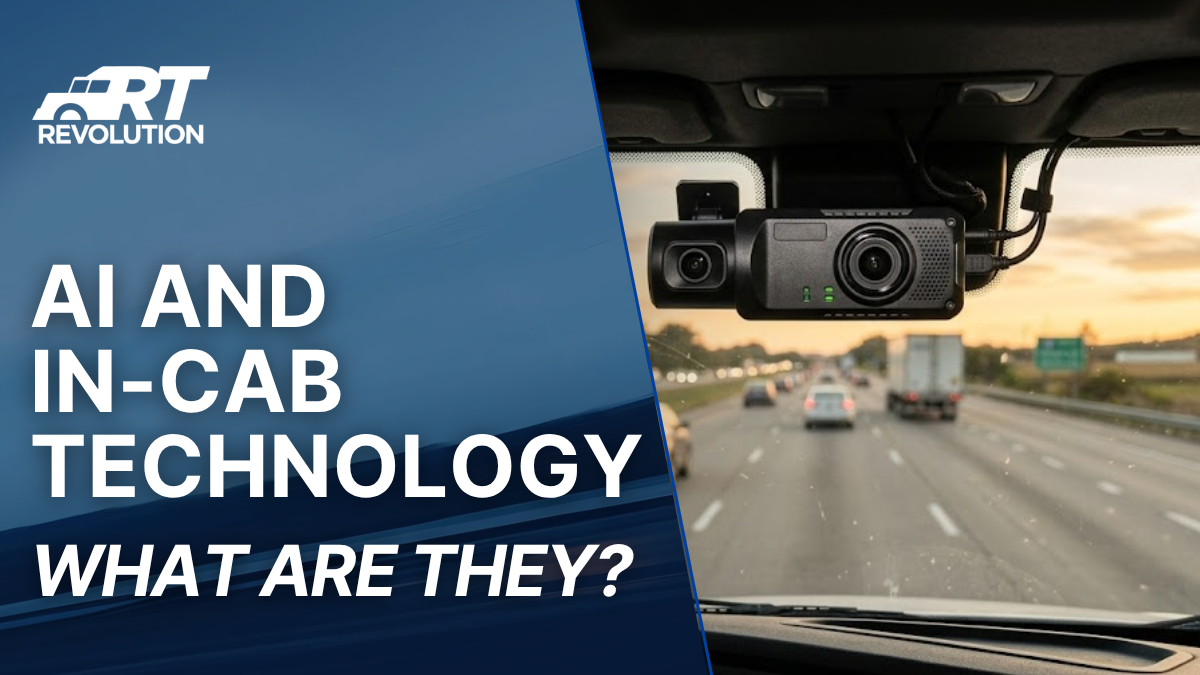
AI-powered fleet safety technology is fundamentally changing how trucking companies prevent accidents and coach drivers. Through dual-facing in-cab cameras with continuous AI image analysis, modern telematics platforms now detect safety-relevant events in real time — from hard braking and lane departure to distracted driving indicators — and translate those events into quantifiable safety scores that carriers use to benchmark and improve driver performance.
What is happening is more than a technology upgrade. It is a structural change in how fleet safety operates. Traditional safety programs relied on lagging indicators: accident reports, CSA scores, and post-incident review. AI fleet safety systems introduce leading indicators — continuous behavioral data that identifies risk patterns before they produce incidents. For carriers operating in mission-critical, no-fail environments, this capability is not optional. It is a core element of operational architecture.
What Is AI Fleet Safety Technology?
AI fleet safety refers to the use of artificial intelligence — primarily computer vision and machine learning — to continuously monitor and analyze driver behavior and road conditions in commercial vehicles. The technology typically consists of three integrated components:
- Dual-facing cameras: Outward-facing cameras capture road conditions, traffic patterns, and external hazards. Inward-facing cameras monitor driver behavior, including eye movement, head position, hand placement, and signs of fatigue or distraction.
- AI-powered event detection: Machine learning algorithms analyze camera feeds continuously, identifying safety-relevant events such as hard braking, following distance violations, lane departure, collision warnings, and distracted driving indicators. These algorithms improve over time as they process more data across fleets.
- Behavioral scoring and alerting: Detected events are aggregated into composite safety scores for individual drivers. Real-time in-cab alerts provide immediate feedback during driving, while post-trip analytics enable targeted coaching and performance tracking.
Platforms such as Samsara, Motive (formerly KeepTruckin), Lytx, and others have emerged as leading fleet telematics safety providers in this space. Samsara fleet safety solutions, in particular, have gained significant traction among carriers operating premium and expedited freight. While implementation details vary across platforms, the core AI trucking technology architecture is consistent: continuous AI observation, event classification, AI driver safety scoring, and intervention capability.
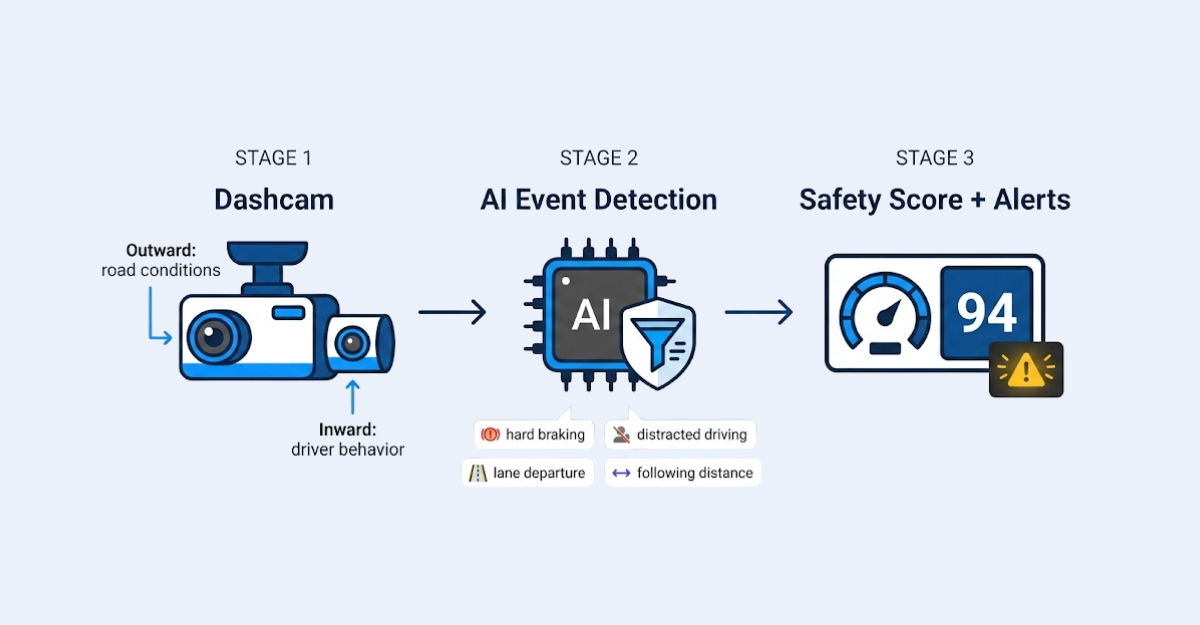
The result is a safety program that operates in real time rather than retrospectively — identifying and addressing risk as it develops rather than documenting it after the fact.
From Reactive Reporting to Real-Time Risk Management
The Limitations of Traditional Fleet Safety Programs
Traditional fleet safety programs depend on regulatory compliance, periodic training, and post-incident analysis. Drivers complete orientation and safety modules. DOT inspections are tracked and managed. When incidents occur, they are reviewed and root causes are identified.
This model is not ineffective, but it is structurally reactive. It measures safety outcomes — accidents, violations, claims — rather than safety behavior. The gap between a developing risk pattern and its recognition by the safety team may span weeks or months, during which the underlying behavior continues uncorrected.
For carriers handling high-value, high-consequence freight across automotive, manufacturing, and technology supply chains, this lag introduces unacceptable exposure. When a single shipment failure can shut down a production line or delay a multi-million-dollar installation, the safety program must identify risk before it materializes as an incident.
How AI Closes the Gap
AI fleet safety systems close the gap between behavior and intervention through three mechanisms:
Continuous monitoring without human observation. AI analyzes every second of driving, across every vehicle in the fleet, simultaneously. No safety team, regardless of size, can replicate this coverage through manual review. The system does not get tired or distracted. It applies consistent criteria across every driver and every shift.
Real-time in-cab intervention. When the AI detects a safety-relevant event — a driver glancing away from the road for an extended period, following distance closing below threshold, or a hard braking event — it can deliver an immediate in-cab alert. This alert functions as real-time behavioral coaching, providing the driver with feedback at the moment the behavior occurs rather than during a post-trip review days later.
This immediacy is significant because behavioral modification is most effective when feedback is contemporaneous with the behavior. A coaching session delivered three days after a distracted driving event is less impactful than an audible alert delivered at the moment of distraction. The in-cab alert creates a direct feedback loop between action and consequence.
Predictive pattern identification. Over time, AI systems identify patterns that individual event reviews cannot. A driver who experiences marginally elevated following-distance warnings during nighttime hours may not trigger any single event that warrants escalation. But the pattern — visible only through aggregate data analysis — may indicate developing fatigue-related risk that warrants proactive intervention.
That predictive risk management capability is what separates modern AI trucking technology from the old model of waiting for something to go wrong. Carriers that leverage fleet telematics safety data effectively can intervene before patterns escalate into incidents.
Understanding AI Safety Scores: What They Measure and What They Miss
How Driver Safety Scores Work
AI driver safety scoring systems aggregate detected events into a composite metric that represents a driver's overall safety performance over a defined period. The specific AI driver safety scoring methodology varies by platform, but most systems weight events by severity and frequency, adjusted for context.
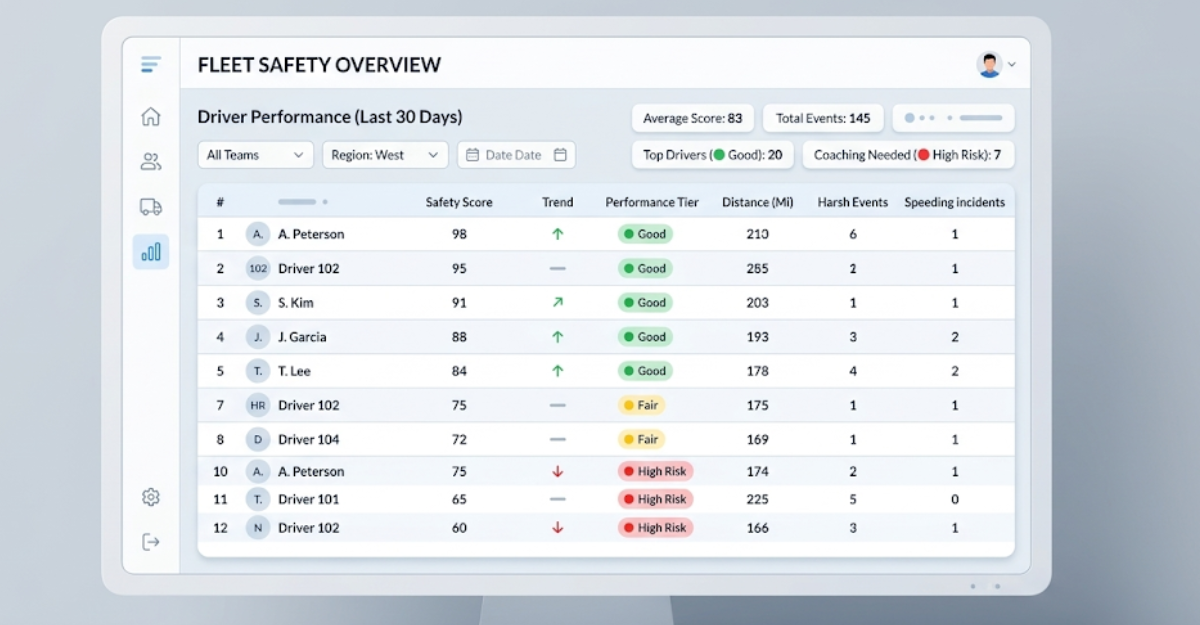
Common inputs to safety scores include:
- Hard braking frequency and severity
- Following distance violations
- Lane departure events
- Distracted driving detections (phone use, extended gaze away from road)
- Speeding relative to posted limits and road conditions
- Collision avoidance interventions
- Seatbelt compliance
- Rolling stop detections
Higher scores indicate safer driving behavior. Carriers typically benchmark individual scores against fleet averages and establish performance tiers that inform coaching, recognition, and incentive programs.
The False Positive Challenge
One of the most critical operational considerations with AI fleet safety systems is the false positive rate. AI event detection is highly capable but imperfect, and certain legitimate driver behaviors can trigger alerts that do not represent genuine safety risks.
Common false positive triggers include:
- Eating or drinking while the vehicle is in motion. In-cab cameras may classify hand-to-mouth movement as distracted driving, even when the driver's eyes remain on the road and the vehicle is operating normally.
- Yawning. AI systems trained to detect fatigue may flag a yawn as a drowsiness indicator, even when the driver is alert and operating within hours-of-service limits.
- Adjusting vehicle controls. Reaching for climate controls, adjusting mirrors, or interacting with dashboard-mounted navigation systems may register as gaze-away events.
- Hands-free phone use. While hands-free communication is permitted under most carrier policies and jurisdictions, some AI systems flag verbal interaction or head movement associated with conversation.
Effective fleet safety programs distinguish between genuine behavioral concerns and false positives at the review stage. Blanket application of AI alerts without human contextual review erodes driver trust in the system and penalizes drivers for normal, safe behavior.
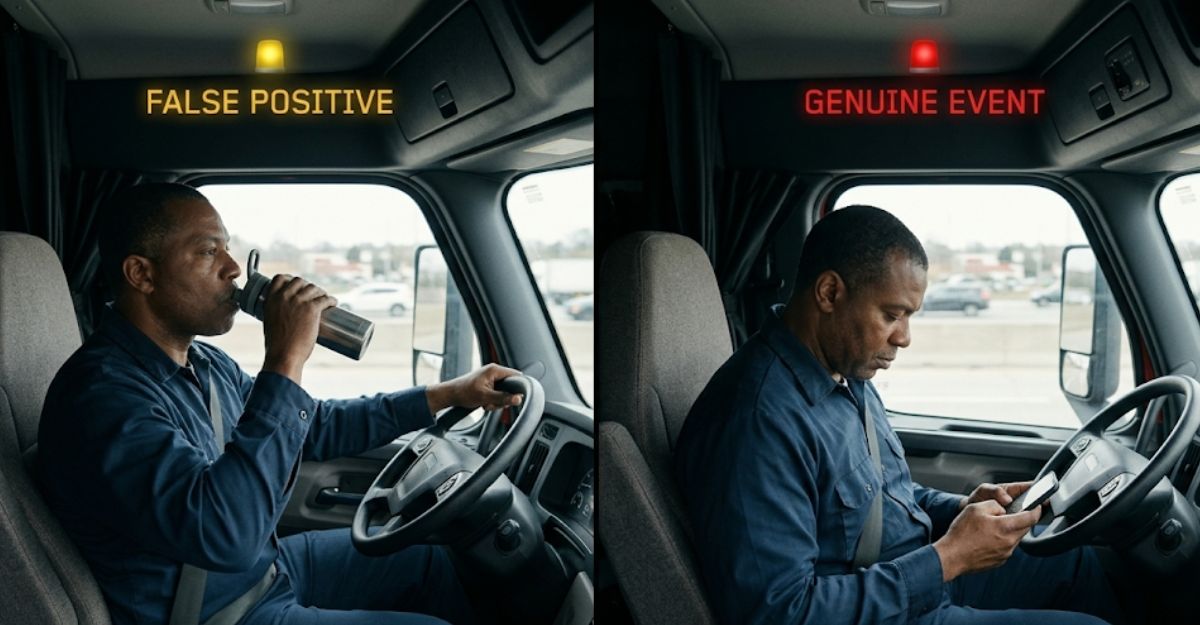
The carriers that extract the most value from AI safety systems build a deliberate triage layer between AI detection and driver-facing action. Safety teams review flagged events with contextual judgment, ensuring that coaching targets genuine risk rather than algorithmic noise.
Distinguishing Driver-Attributable Events From External Factors
A related challenge is the attribution of safety events. In operational practice, a substantial majority of flagged safety events in well-managed fleets are not attributable to driver error. Industry carriers report that in many fleets, upward of 90 percent of detected events originate from external factors:
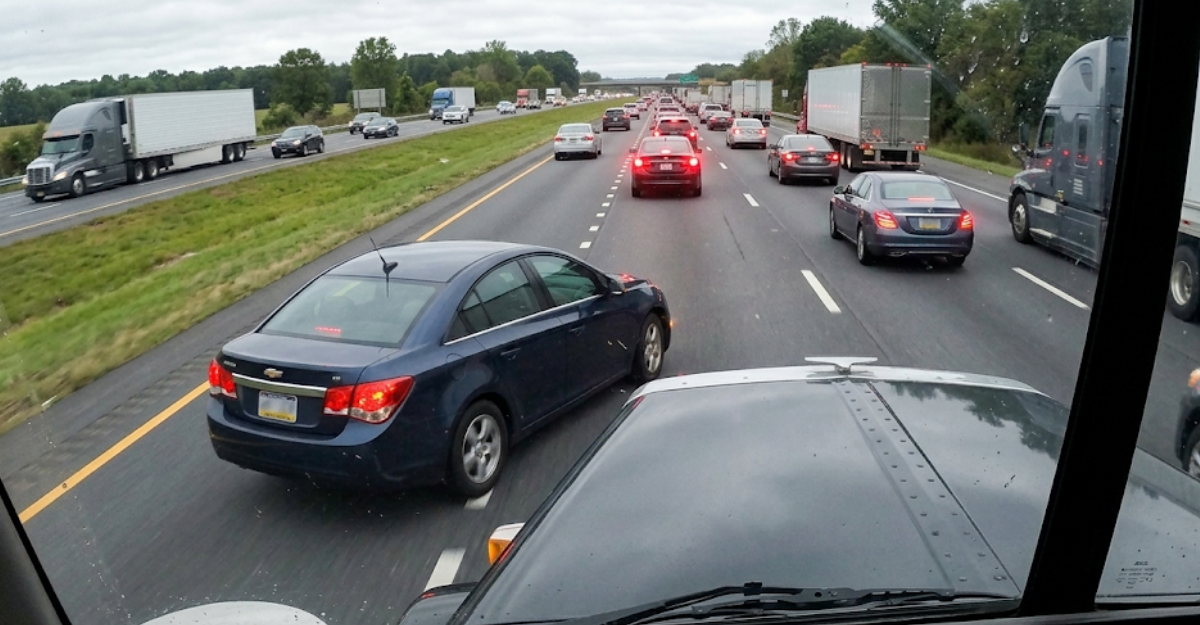
- A passenger vehicle cutting into the truck's lane, triggering a hard braking event
- Sudden traffic deceleration ahead, requiring emergency speed reduction
- Wildlife crossing the roadway
- Debris or road hazards requiring evasive action
- Weather-related traction events
When these events are scored without contextual review, they distort the driver's safety profile and undermine the credibility of the scoring system. AI platforms are improving their ability to attribute events contextually — analyzing both inward and outward camera feeds simultaneously to determine whether the driver's behavior was appropriate given the external situation — but human review remains essential for accurate attribution.
Carriers that communicate this distinction clearly to their drivers — acknowledging that most flagged events are external rather than behavioral — build trust in the system and encourage genuine engagement with the coaching process.
Implementing AI Fleet Safety: Operational Best Practices
Driver Communication and Buy-In
The single most important factor in successful AI safety implementation is driver communication. Drivers who perceive in-cab cameras as surveillance tools rather than safety investments will resist the technology, and that resistance degrades its effectiveness.
Effective communication strategies include:
- Transparency about data use. Carriers should clearly communicate what the AI monitors, how footage is accessed, and under what circumstances recordings are reviewed. In well-structured programs, safety teams do not actively watch live streams. They review footage only when an event is flagged — a distinction that is meaningful to drivers and should be communicated proactively.
- Emphasis on protection rather than punishment. In-cab footage frequently exonerates drivers in accident investigations, insurance claims, and freight exception scenarios. When a hard braking event is caused by another motorist's behavior, outward-facing footage provides objective evidence that protects the driver from unjustified liability.
- Involvement in the coaching process. Drivers who participate in reviewing their own flagged events — rather than simply being informed of infractions — develop greater ownership of their safety performance and provide contextual information that improves the accuracy of future event classification.
Incentive Programs Tied to Safety Scores
Carriers that pair AI safety systems with positive incentive structures consistently observe stronger adoption and sustained performance improvement. Monthly recognition and financial incentives for the highest safety scores create a positive reinforcement loop that motivates continuous improvement.

The most effective incentive programs share several characteristics:
- They reward improvement as well as absolute performance, ensuring that newer drivers are not excluded from recognition
- They communicate standings transparently, so drivers understand their relative performance
- They are funded meaningfully enough to represent genuine recognition rather than symbolic acknowledgment
- They distinguish between driver-attributable performance and external events, so scoring reflects actual behavior
Carriers report that top-performing drivers under incentive programs frequently maintain their ranking month after month — a pattern that reflects genuine, sustained behavioral excellence rather than statistical variance. Interestingly, some of these consistently high performers are drivers whose cognitive wiring gives them a natural edge in predictive risk management trucking environments. Research into neurodivergence in logistics suggests that traits associated with ADHD — hypervigilance, rapid multi-input attention, and advanced pattern recognition — can translate into measurably superior safety performance when supported by the right tools and culture.
Integration With Dispatch and Fleet Operations
AI safety data becomes most valuable when it is integrated with broader fleet operations rather than siloed within the safety department.
Dispatch teams that have visibility into driver safety scores can make informed assignment decisions — routing the highest-performing drivers on the most consequential loads, or providing additional support for drivers operating in challenging conditions. This integration aligns safety performance with operational execution in the mission-critical space.
Maintenance teams can correlate vehicle-level data (hard braking frequency, tire pressure anomalies) with safety events to identify mechanical factors that contribute to elevated risk. Route optimization tools can incorporate safety data to identify corridors with elevated event frequency and adjust routing accordingly.
The Technology function — which increasingly sits at the center of modern logistics operations — serves as the integration point for these data streams. (For a broader look at how technology infrastructure supports logistics execution, see Revolution's Technology platform overview.)
The Liability Dimension: Why AI Fleet Safety Is No Longer Optional
The trucking industry's liability landscape has shifted dramatically in recent years. What industry legal analysts term "nuclear verdicts" — jury awards exceeding $10 million in trucking accident litigation — have become increasingly common according to the American Transportation Research Institute, and plaintiff attorneys routinely request in-cab footage, telematics data, and safety training records during discovery.
Carriers that have implemented AI fleet safety systems and can demonstrate consistent monitoring, coaching, and continuous improvement are better positioned to defend against negligence claims. Conversely, carriers that have not implemented available safety technology face increasing exposure to arguments that they failed to adopt reasonable precautions.

This liability calculus is particularly acute for carriers operating in the premium freight space, where the consequences of failure extend beyond the immediate incident to include production shutdowns, contractual penalties, and reputational damage. For these carriers, AI fleet safety is an investment in operational risk management as much as it is a safety tool.
Certifications such as SmartWay and TWIC signal baseline compliance. For disability-owned carriers pursuing DOBE certification or other diverse supplier designations, demonstrable AI-powered Samsara fleet safety programs further strengthen the value proposition to enterprise shippers. These programs signal operational discipline that extends well beyond minimum regulatory requirements.
The Human Element: Why Technology Requires Relationship
AI fleet safety technology generates data. It does not generate trust. The effectiveness of any telematics implementation depends on the relationship between the carrier and the driver.
Carriers where dispatchers maintain personal, consistent relationships with their assigned drivers — where the same dispatcher works with the same group of drivers over time — create an environment where safety coaching is received as support rather than criticism. When a driver's flagged event is reviewed by someone who knows their history and has invested in their development, the conversation is fundamentally different from an automated notification generated by an algorithm.
That relational infrastructure is not incidental to AI fleet safety. It is a prerequisite for its success. The technology provides the data. The relationship provides the context that makes the data actionable.
For carriers committed to treating drivers as long-term partners rather than interchangeable assets, AI fleet safety becomes a tool for investment rather than surveillance — a mechanism for helping drivers become safer and more confident over the course of their careers.
Frequently Asked Questions
What is AI fleet safety in trucking? AI fleet safety uses artificial intelligence — primarily computer vision and machine learning — to continuously monitor driver behavior and road conditions through dual-facing in-cab cameras. The technology detects safety-relevant events in real time and generates composite safety scores for individual drivers, with immediate in-cab coaching alerts. The net effect is a shift from reactive incident reporting to proactive risk management.
How do in-cab cameras work in commercial trucks? In-cab camera systems in trucking typically include an outward-facing camera that captures road conditions and an inward-facing camera that monitors driver behavior. AI algorithms analyze both feeds continuously, detecting events such as hard braking, lane departure, distracted driving, and following distance violations. Footage is recorded but is typically reviewed only when an event is flagged — safety teams do not watch live streams under normal operating conditions.
What are AI driver safety scores? AI driver safety scores are composite metrics that aggregate detected safety events over a defined period, weighted by severity, frequency, and context. Common scoring inputs include hard braking, following distance, lane departure, distracted driving detection, speeding, and seatbelt compliance. Higher scores indicate safer driving behavior. Carriers use these scores for benchmarking, coaching, and incentive programs.
Do in-cab cameras reduce trucking accidents? Industry data indicates that carriers implementing AI-powered in-cab camera systems experience measurable reductions in safety incidents, insurance claims, and at-fault accidents. The combination of real-time in-cab alerts and targeted coaching based on behavioral data creates a continuous improvement cycle that reduces risk over time, particularly when paired with incentive programs tied to safety scores.
What are the challenges of AI fleet safety systems? The primary challenges include false positive detection (legitimate behaviors like eating or yawning triggering alerts), driver resistance when cameras are perceived as surveillance rather than safety tools, accurate attribution of events between driver behavior and external factors, and the need for human contextual review rather than purely algorithmic enforcement. Carriers that address these challenges through transparent communication and structured triage processes achieve stronger adoption and better outcomes.
How does AI fleet safety relate to trucking liability? Nuclear verdicts in trucking litigation have made proactive safety technology an increasingly important component of risk management. Carriers that can demonstrate consistent AI monitoring and documented driver coaching are better positioned to defend against negligence claims. The absence of available safety technology can be used by plaintiff attorneys to argue that a carrier failed to adopt reasonable precautions.
Can AI safety data be integrated with other fleet systems? Yes. AI safety data is most valuable when it flows beyond the safety department into dispatch and maintenance. Dispatch teams can use safety scores for load assignment decisions. Maintenance teams can correlate vehicle data with safety events to catch mechanical issues before they produce incidents. Route planners can incorporate safety analytics to flag high-risk corridors. The common thread is that safety data improves decisions across the operation, not just within one department.
other blog posts
.webp)


.webp)
%2520(3).webp)