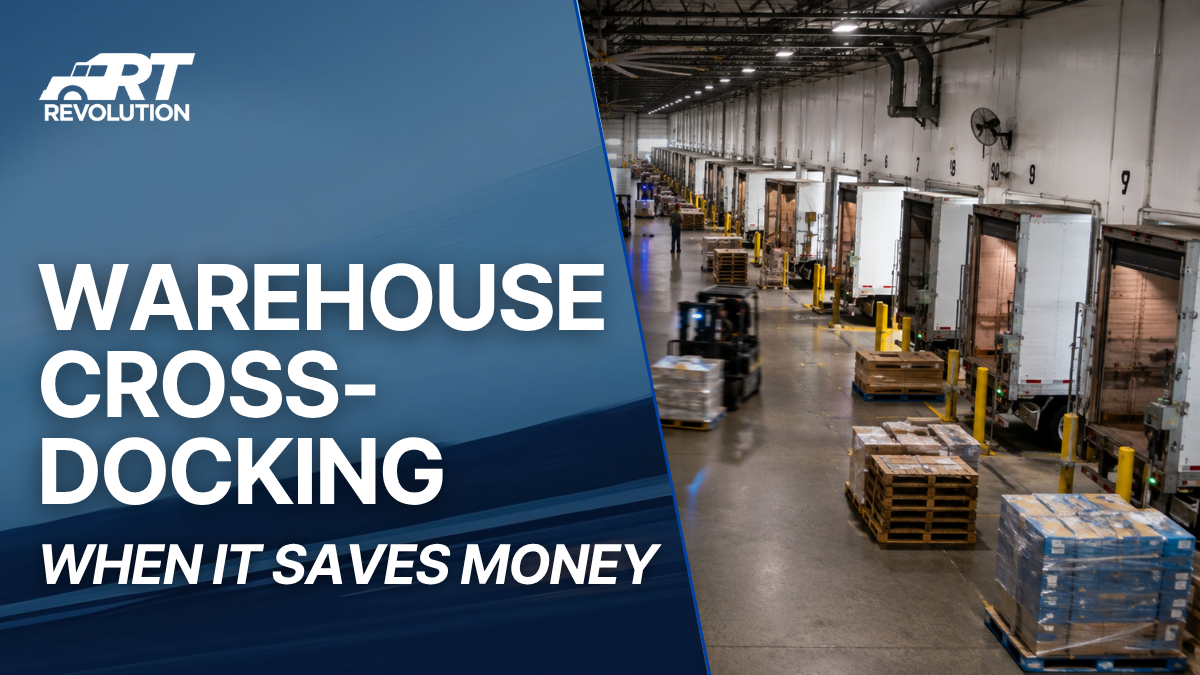
Cross-docking is a logistics strategy that moves freight from inbound trucks directly to outbound trucks with minimal or no intermediate storage. Freight arrives at a facility, is sorted or consolidated, and departs, often within hours. The product never enters racking or sits in a warehouse bay accumulating carrying costs. The facility functions as a transfer point, not a storage location.
When the conditions are right, cross-docking can reduce supply chain costs by up to 30 percent compared to traditional warehousing. The savings come from eliminating storage space costs, reducing inventory holding time, decreasing handling touches (each touch adds labor cost and damage risk), and compressing the time between supplier shipment and customer delivery. The grocery, retail, automotive, and consumer electronics industries have used cross-docking for decades because their freight profiles (high volume, predictable demand, and tight delivery windows) align with the operational model.
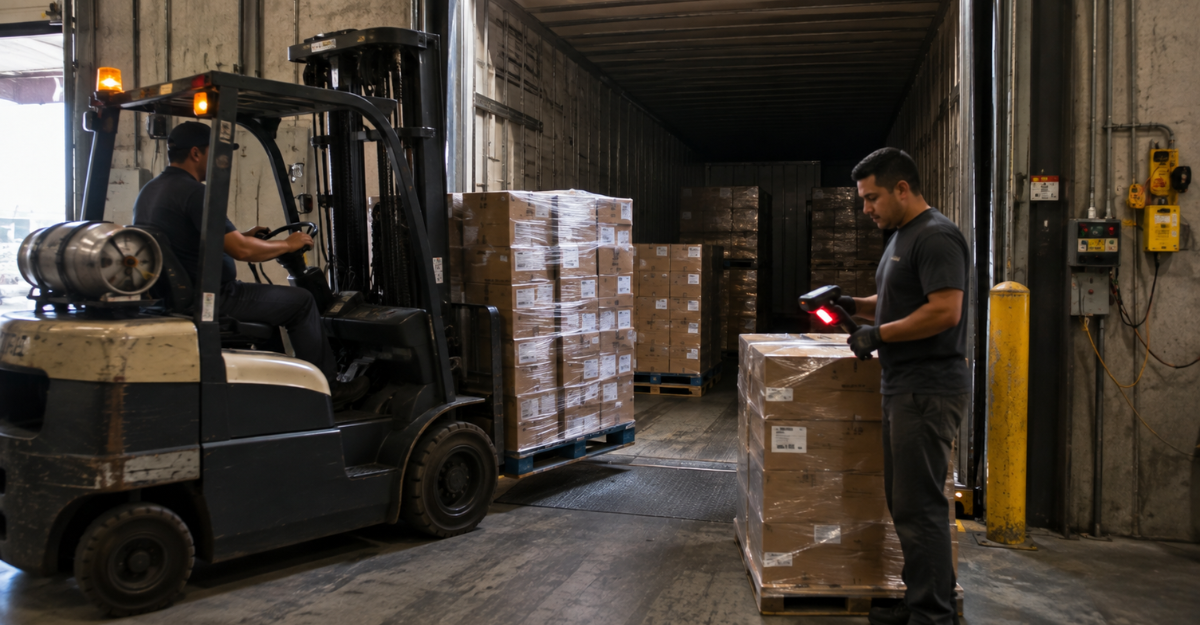
But cross-docking is not universally applicable. It requires purpose-built facility infrastructure, technology integration with every inbound supplier, and a coordination discipline that traditional warehousing does not demand. Using cross-docking for the wrong freight or without the right infrastructure produces chaos rather than savings.
This guide covers how cross-docking works, what a cross-dock facility looks like, the technology requirements, which freight profiles benefit from cross-docking, and the conditions that make traditional warehousing the better choice.
How Cross-Docking Works
A cross-dock operation has three stages:
Stage 1: Receiving
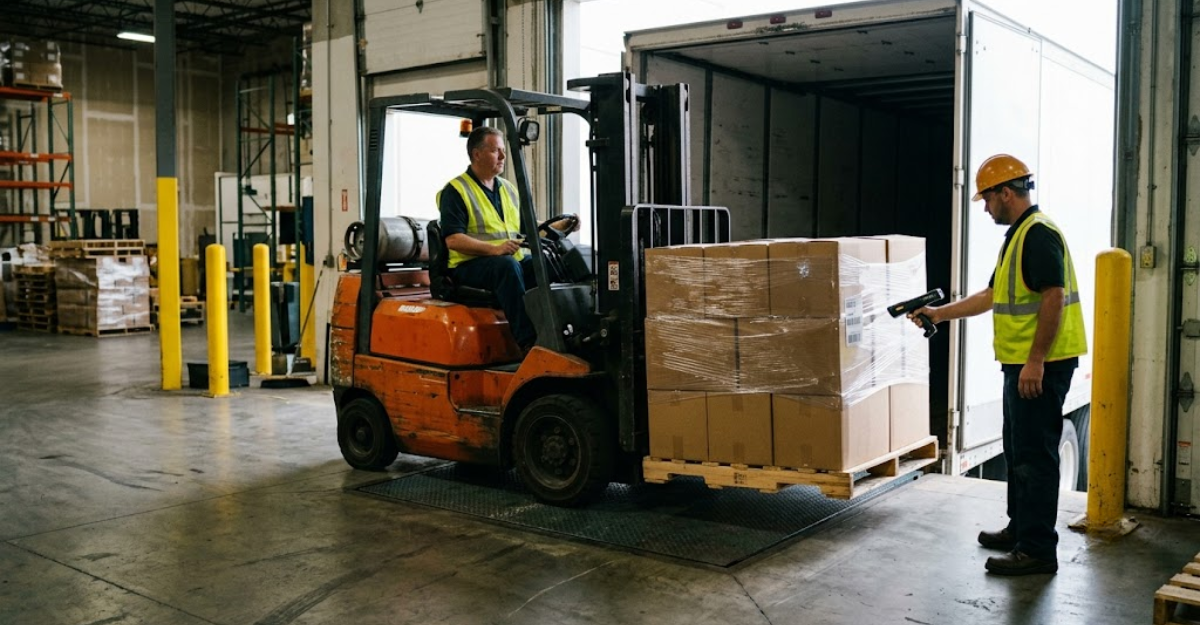
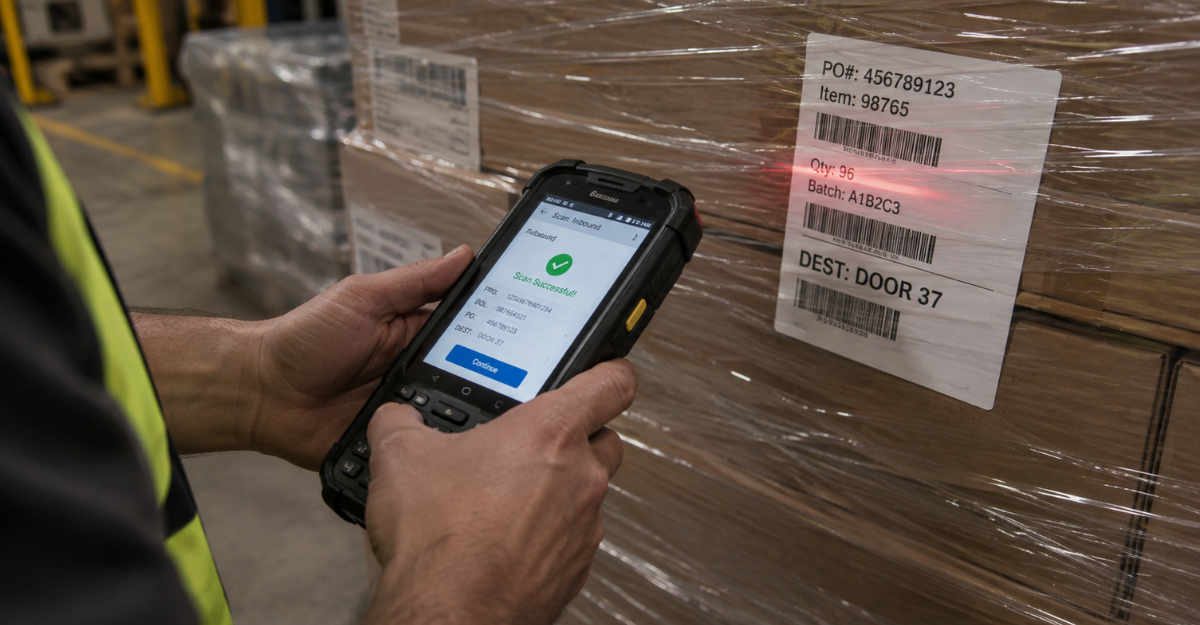
Inbound trucks arrive at the facility and dock at receiving doors. The freight is unloaded and scanned against an advance ship notice (ASN) or purchase order that tells the cross-dock operator what each pallet or case contains and where it needs to go next. If the ASN was received electronically before the truck arrived, the facility knows in advance exactly what is coming and has already assigned outbound destinations for every item.
The receiving process in a cross-dock facility is fundamentally different from traditional warehouse receiving. In a warehouse, received freight is put away, moved to a rack or bin and logged into inventory. In a cross-dock, received freight is staged for immediate movement to an outbound door. There is no put-away step.
Stage 2: Sorting and Consolidation
This is the operational core of cross-docking. Freight from multiple inbound sources is sorted by outbound destination and consolidated onto outbound loads. A retail distribution operation, for example, might receive full truckloads from 15 different suppliers throughout the morning. Each truckload contains products destined for multiple stores. The cross-dock facility breaks down the inbound loads, sorts the product by store, and consolidates all of the products destined for each store onto a single outbound truck.
Sorting may be manual (workers using pallet jacks or forklifts to move freight from receiving staging to outbound staging), conveyor-based (product moves on powered conveyor systems with divert mechanisms that route items to the correct outbound lane), or automated (sortation systems using barcode or RFID scanning to direct items to the correct outbound dock).
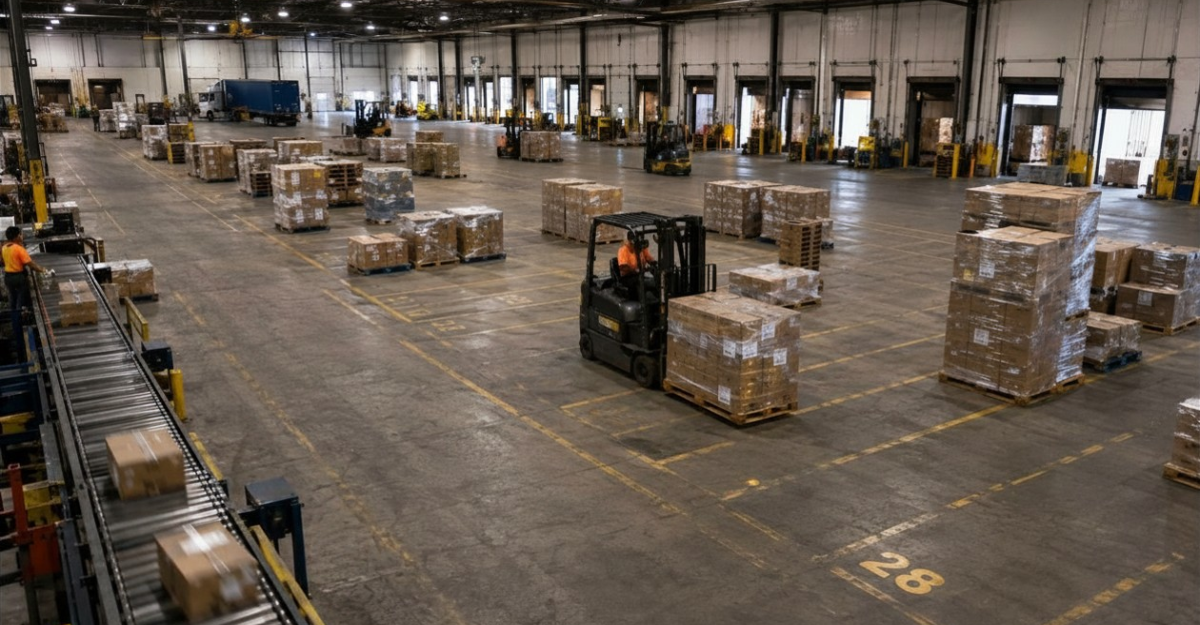
The complexity of the sorting operation depends on the granularity of the sort. A pallet-level cross-dock, where entire pallets move from inbound to outbound without being broken down, is the simplest and fastest. A case-level cross-dock, where inbound pallets are broken down and individual cases are sorted to outbound destinations, is more labor-intensive but allows finer consolidation.
Stage 3: Dispatch
Sorted and consolidated freight is loaded onto outbound trucks and dispatched to final destinations. The ideal cross-dock operation completes all three stages within 24 hours, and many complete the cycle in 2 to 6 hours. The goal is that freight spends as little time in the facility as possible. Any time the freight is sitting idle is time that could have been eliminated by improving the operation.
Cross-Dock Facility Design
Cross-dock facilities are purpose-built for throughput, not storage. The characteristic design is an I-shaped building with receiving docks on one side and shipping docks on the other, separated by a narrow floor area where sorting and staging occur. Some facilities use an L-shape or T-shape to separate freight flows or accommodate more dock doors, but the I-shape is the most common configuration because it minimizes the distance freight travels between inbound and outbound docks.
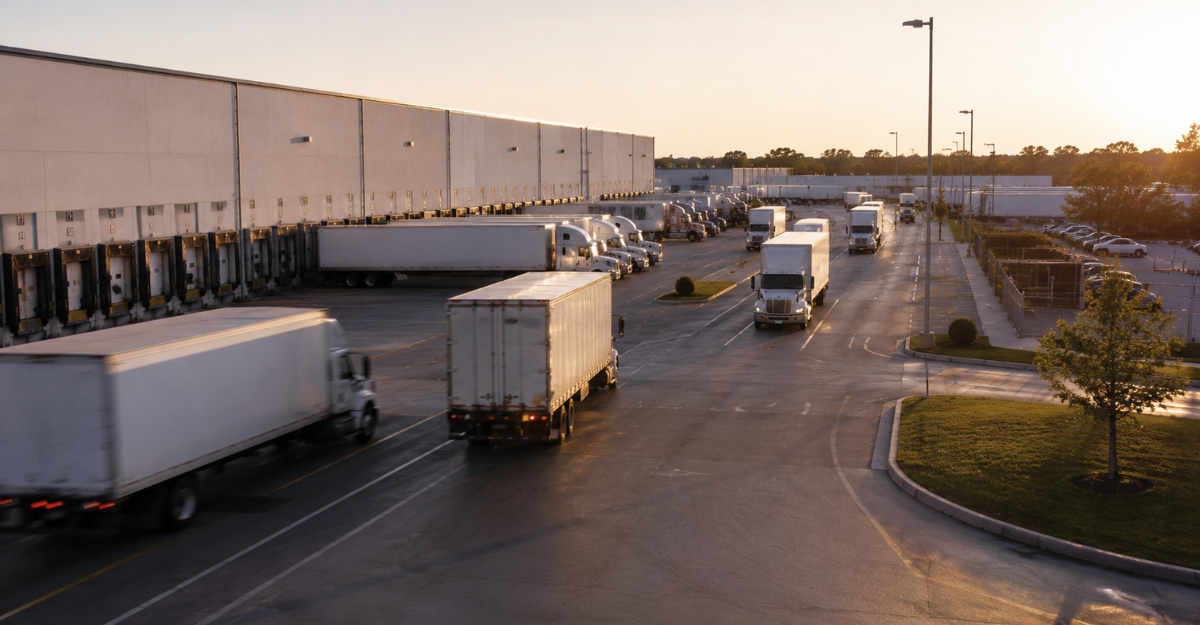
Dock door density is the critical facility metric. A traditional warehouse might have 20 dock doors for a 200,000-square-foot building. A cross-dock facility of the same square footage might have 80 to 120 dock doors because the operation's throughput is measured in truck turns per day, not storage capacity. More dock doors mean more simultaneous inbound and outbound loads, which means faster cycle times.
.png)
Interior space is dominated by staging areas rather than racking. A cross-dock floor typically has painted or taped lanes that designate outbound destinations. Lane 1 corresponds to outbound dock 1, lane 2 to dock 2, and so on. Inbound freight is moved to the correct lane, staged, and then loaded when the outbound truck is ready. Conveyors or powered sort systems may replace floor staging in high-volume operations.
Yard management is as important as the facility interior. The timing of inbound arrivals and outbound departures must be coordinated precisely. If 10 inbound trucks arrive simultaneously but only 6 dock doors are available for receiving, 4 trucks wait in the yard. Every hour of wait time is an hour of detention and an hour of delay in the cross-dock cycle. Effective yard management systems (YMS) schedule dock appointments and sequence inbound arrivals to match outbound departure schedules.
Technology Requirements
Cross-docking depends on information as much as infrastructure. The entire operation is orchestrated by data that must be accurate and available before the truck arrives, integrated across suppliers, the cross-dock operator, and outbound carriers.
Warehouse Management System (WMS)
The WMS in a cross-dock operation manages receiving against advance ship notices, assigns inbound freight to outbound destinations in real time, directs the sorting floor (which lanes, which dock doors), and generates outbound shipping documentation (bills of lading, manifests, delivery receipts).
A WMS designed for cross-docking is different from a WMS designed for warehousing. The core logic is allocation-driven (which outbound load does this inbound item go to?) rather than location-driven (which rack slot does this item go to?). Some WMS platforms support both models; others are optimized for one or the other.
Advance Ship Notices
The ASN is the foundational data element in cross-docking. It tells the facility what freight is coming, when it is arriving, what each pallet or case contains, and — critically — where each item needs to go next. Without accurate ASNs, the cross-dock facility cannot pre-plan outbound loads or pre-assign sorting lanes, losing the time advantage that makes cross-docking viable in the first place.
Suppliers who send late or inaccurate ASNs create bottlenecks at receiving. Every pallet that arrives without a matching ASN must be manually identified and assigned, a process that can take 5 to 10 minutes per pallet compared to 30 seconds with a valid ASN. At scale, poor ASN quality can cripple a cross-dock operation.
Barcode and RFID Scanning
Every item moving through a cross-dock facility must be scannable. The scanning infrastructure (barcode guns, fixed scanners, or RFID readers) is what connects the physical freight to the WMS logic that determines where it goes. Scan failures — a damaged label, a missing barcode — create exceptions that require manual resolution, adding time and labor cost to every affected pallet.
Types of Cross-Docking
Manufacturing Cross-Docking
Inbound parts and materials from multiple suppliers are consolidated and sequenced for delivery to a manufacturing production line. The cross-dock facility receives components from 10 different suppliers and assembles them into kits or sequenced loads that arrive at the plant in the order the production line needs them. Automotive manufacturing is the classic example: seats, dashboards, wiring harnesses, and trim components from different suppliers are cross-docked into sequenced loads that match the vehicle production schedule.
Distributor Cross-Docking
Inbound full truckloads from manufacturers are broken down and sorted by customer or delivery route. This is the retail model: a distributor receives truckloads from Procter & Gamble, Unilever, General Mills, and Kimberly-Clark, breaks each truckload into store-specific quantities, and consolidates all products for each store onto a single outbound truck. The store receives one delivery instead of four.
Transportation Cross-Docking
Also called hub-and-spoke consolidation, this model collects LTL shipments from multiple origins at a regional hub, sorts them by destination region, and consolidates them onto linehaul trucks for long-haul transport. Every major LTL carrier operates a network of cross-dock terminals. The freight moves from pickup truck to cross-dock to linehaul truck to destination cross-dock to delivery truck without entering traditional warehouse storage at any point.
Opportunistic Cross-Docking
Freight that was not originally planned for cross-docking is diverted from warehouse put-away when an immediate outbound demand exists. A warehouse receives a truckload of product and, instead of storing it, identifies that 60 percent of the shipment matches pending customer orders. That 60 percent is cross-docked directly to outbound shipping; the remaining 40 percent is put away normally. The hybrid approach captures cross-docking efficiencies where they exist without requiring a dedicated cross-dock facility.
When Cross-Docking Works
Cross-docking produces the greatest value when several freight and operational characteristics align:
High volume, predictable flow. Cross-docking requires sufficient inbound volume to fill outbound trucks efficiently. If inbound shipments are sporadic, the outbound trucks sit partially loaded, waiting for freight that has not arrived, and the efficiency advantage disappears. Consistent daily or weekly volume from a stable supplier base is the foundation.
Time-sensitive freight. Products with short shelf lives (fresh food, pharmaceuticals with expiration constraints), products with high demand velocity (fast-moving consumer goods), or products with time-definite delivery commitments (expedited freight, next-day retail replenishment) all benefit from the compressed cycle time that cross-docking provides.
Pre-sorted or pre-labeled freight. The less sorting the cross-dock facility needs to do, the faster the operation runs. Suppliers who ship pallets that are already labeled for the final destination, or who pack cases in store-ready configurations, reduce the cross-dock processing time and cost. If every inbound pallet requires manual identification and relabeling, the labor cost may offset the storage savings.
Multiple suppliers consolidating to common destinations. Cross-docking excels when the problem is "many inbound sources, fewer outbound destinations." Consolidating 12 inbound shipments into 4 outbound trucks is the core value proposition. If the freight moves one-to-one (one inbound source to one outbound destination), cross-docking adds a handling step without adding consolidation value. The freight should move direct.
When Traditional Warehousing Is Better
Cross-docking is not a replacement for warehousing. The following conditions favor traditional storage:
Demand is unpredictable. If you cannot forecast when the product will ship outbound, you cannot coordinate inbound arrivals with outbound departures. The freight needs to be stored until demand materializes. Safety stock strategies and seasonal inventory builds for supply chain resilience require storage capacity by definition.
Order customization or value-added services are required. Kitting, labeling, assembly, or quality inspection — any value-added service that takes time — needs a warehouse environment where the product can be staged and worked before it ships.
Inbound suppliers are unreliable. Cross-docking collapses when inbound arrivals are late, incomplete, or inconsistent. If 3 of the 10 inbound trucks needed to build outbound loads are delayed by 6 hours, the outbound trucks either depart partially loaded (inefficient) or wait (defeating the purpose of cross-docking). Suppliers with on-time delivery rates below 90 percent are poor candidates for cross-dock programs.
Volume is insufficient. A cross-dock facility that handles 5 trucks per day cannot generate the throughput to justify its dock door count and staffing overhead. Cross-docking becomes cost-effective at volumes that sustain continuous inbound and outbound flow, typically 20+ truck-turns per day for a standalone operation.
Measuring Cross-Dock Performance
The metrics that matter in cross-docking are different from traditional warehouse KPIs:
Dock-to-dock cycle time: The elapsed time from when freight arrives at the inbound dock to when it departs on an outbound truck. Targets vary by operation: 2 to 6 hours is typical for a well-run cross-dock, 24 hours is the outer limit before the operation starts resembling warehousing.
Throughput per dock door per hour: How many pallets, cases, or units each dock door processes per hour. This measures facility productivity and identifies bottlenecks — a receiving door that processes 15 pallets per hour while the shipping doors process 25 signals a receiving bottleneck.
Sort accuracy: The percentage of items that are sorted to the correct outbound load on the first pass. Sort errors create rework and delay outbound departures. The wrong product showing up at the wrong store is a problem that cascades downstream. Targets should exceed 99.5 percent.
Truck turn time: How long an inbound or outbound truck is docked. In cross-docking, dock doors are the constraining asset — every minute a truck occupies a door is a minute that door is unavailable for the next truck. Reducing truck turn time directly increases facility throughput.
Frequently Asked Questions
What is cross-docking in logistics? Cross-docking is a logistics strategy that transfers freight from inbound trucks directly to outbound trucks with minimal or no intermediate storage. Freight is received, sorted by destination, consolidated onto outbound loads, and dispatched, typically within 2 to 24 hours. The facility operates as a transfer point rather than a storage location, eliminating warehousing costs and reducing delivery cycle times.
How much can cross-docking save? Cross-docking can reduce supply chain costs by up to 30 percent compared to traditional warehousing, with savings from eliminated storage costs, reduced inventory carrying costs, fewer handling touches, and compressed delivery timelines. Actual savings depend on freight volume, the number of suppliers being consolidated, and the efficiency of the cross-dock operation.
What is the difference between cross-docking and warehousing? In traditional warehousing, freight is received, put away into storage locations, stored until needed, picked, packed, and shipped. In cross-docking, freight skips the storage and pick-pack steps and moves directly from receiving to shipping. Warehousing is for holding inventory; cross-docking is for sorting and consolidating freight in motion.
What types of freight work best for cross-docking? Cross-docking works best for high-volume, predictable-flow freight that is time-sensitive and pre-sorted. Strong candidates include fast-moving consumer goods, grocery and perishable products, retail store replenishment, automotive parts sequencing, and LTL freight consolidation. Freight with unpredictable demand, customization requirements, or unreliable inbound timing is better suited to traditional warehousing.
What technology is needed for cross-docking? A cross-dock operation requires a warehouse management system (WMS) designed for allocation-based logic, advance ship notice (ASN) integration with suppliers, barcode or RFID scanning infrastructure, and a yard management system (YMS) for dock scheduling. The ASN is the most critical element. Without accurate advance notification of inbound freight, the facility cannot pre-plan outbound loads.
What is the difference between manufacturing and distributor cross-docking? Manufacturing cross-docking consolidates parts from multiple suppliers into production-sequenced loads for delivery to a factory line. Distributor cross-docking breaks down full truckloads from manufacturers and sorts products by customer or delivery route for last-mile distribution. The operational mechanics are similar; the direction of the consolidation is different.
other blog posts
%2520(1).webp)
.webp)
%2520(1).webp)
%2520(1).webp)