The ELD mandate is not new. FMCSA finalized the electronic logging device rule in December 2015, full enforcement began in December 2019, and by now the industry has had over six years to comply. But 2026 is the year that enforcement is getting teeth — and that several carriers are discovering their devices no longer qualify.
On July 9, 2026, FMCSA removed multiple ELD models from the registered device list. Carriers using those devices have until September 8, 2026, to replace them with a compliant unit or face the same penalties as operating without an ELD at all. This is not a theoretical risk. During a DOT inspection, an officer who pulls up the registered device list and finds the carrier's ELD is no longer on it will treat the driver as non-compliant — regardless of whether the device is physically installed and functioning.
For shippers, carrier ELD compliance is not a detail buried in a safety questionnaire. It is a binary indicator: the carrier either runs legal or it does not. A carrier operating with de-registered ELDs is one inspection away from having its trucks placed out of service, and a shipper whose freight is on that truck inherits the delay.
This guide covers what ELDs do, who must comply, the 2026 enforcement developments that are reshaping compliance, the exemptions that still apply, and what shippers should be asking their carriers.
What an ELD Does
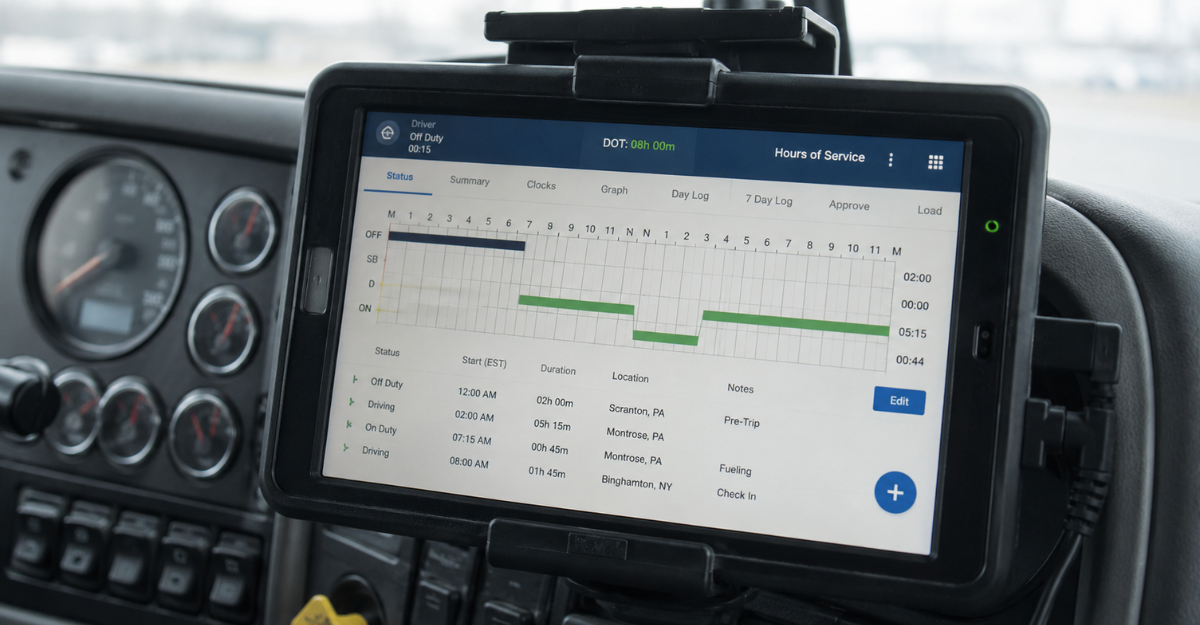
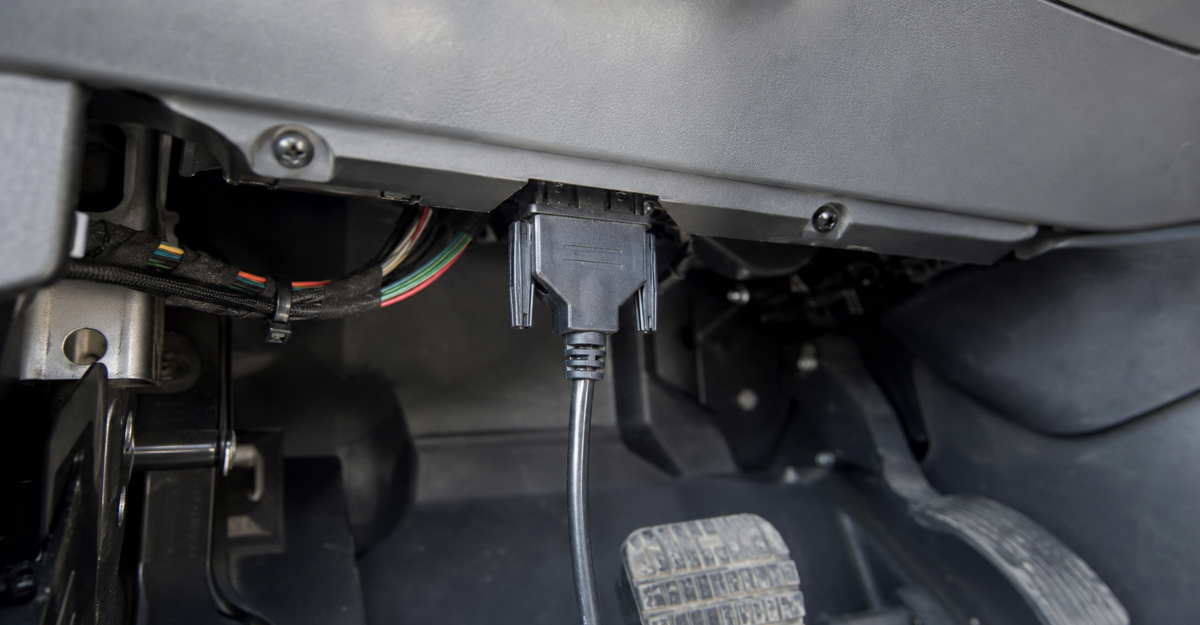
An electronic logging device is a piece of hardware connected to the vehicle's engine control module (ECM) that automatically records driving time. When the engine is running and the vehicle is moving, the ELD captures that time as driving time. When the engine is running but the vehicle is stationary, the driver manually selects the appropriate duty status — on-duty not driving, sleeper berth, or off duty.
The ELD replaced paper logbooks, which drivers filled out manually to record their hours of service. The fundamental problem with paper logs was accuracy. A driver who wanted to drive beyond legal limits could falsify the paper record — and enforcement relied on inspectors catching mathematical inconsistencies in handwritten entries, which was difficult to do reliably at scale.
ELDs solve this by tying the record to the engine. A driver cannot falsify the driving time record without physically tampering with the device or the ECM connection. The device records engine hours, vehicle miles, date, time, and location data automatically and continuously.
What ELDs Must Record
FMCSA's technical specifications (49 CFR Part 395, Subpart B) require ELDs to capture date and time of each duty status change (with minute-level accuracy synchronized to UTC), location at each status change (latitude/longitude with accuracy sufficient to determine the nearest city and state), engine hours and vehicle miles at each status change, driver and carrier identification, vehicle identification (VIN and unit number), and event annotations and comments entered by the driver.
The device must also support electronic data transfer to an inspector during a roadside inspection — either via Bluetooth, USB, or email. A device that records the data but cannot transmit it to an inspector during an inspection does not meet the mandate.
The FMCSA Registered Device List
FMCSA maintains a public list of ELD devices that have been self-certified by their manufacturers as meeting the technical specifications. The word "self-certified" is important — FMCSA does not independently test or approve ELD devices. Manufacturers attest that their devices meet the specifications and submit them for the list.
The list is not static. FMCSA periodically reviews registered devices and removes those that no longer meet the specifications, whose manufacturers have gone out of business, or whose manufacturers have failed to maintain the required data transfer capabilities. When a device is removed from the list, it is no longer a compliant ELD — even if it was compliant when the carrier purchased it.
This is exactly what happened in July 2026. Multiple devices that carriers had been using for years were removed from the registered list, and the carriers using them were given a 60-day window to replace them.
Who Must Comply
The ELD mandate applies to most drivers of commercial motor vehicles (CMVs) who are required to keep records of duty status (RODS) under 49 CFR Part 395. In practical terms, this means drivers operating vehicles with a gross vehicle weight rating (GVWR) of 10,001 pounds or more in interstate commerce.
The scope is broad. It covers for-hire carriers (truckload, LTL, expedited, specialized), private carriers (companies operating their own trucks to move their own goods), and owner-operators leased to carriers or operating under their own authority. The mandate applies regardless of the carrier's size. A carrier with two trucks faces the same ELD requirement as a fleet with 10,000 trucks.
ELD Exemptions
Several categories of drivers and vehicles are exempt from the ELD mandate. Shippers should understand these exemptions because they explain why some carriers — particularly smaller local operators — legally operate without ELDs:
Short-haul exception (49 CFR 395.1(e)(1)): Drivers who operate within a 150 air-mile radius of their normal work reporting location, return to that location within 14 hours, and do not exceed 11 driving hours may use timecards instead of RODS — and are therefore exempt from the ELD mandate. This exemption covers a significant number of local delivery drivers, drayage operators, and regional haulers. FMCSA has proposed expanding this radius to 175 air miles.
8-of-30-day exception: Drivers who use paper RODS for 8 or fewer days within any 30-day period are exempt from the ELD mandate. This covers drivers who only occasionally operate CMVs — such as a company employee who drives a qualifying vehicle a few times per month but spends most of their time in non-driving roles.
Pre-2000 model year vehicles: CMVs manufactured before model year 2000 are exempt from the ELD mandate because their engines may not have the electronic control modules required for ELD integration. This exemption is narrowing each year as pre-2000 vehicles age out of active service.
Drive-away-tow-away operations: Drivers delivering vehicles as the commodity being transported (driving them to the buyer or to a dealer) are exempt when the vehicle being driven is the commodity.
Agricultural operations with HOS exemptions: Certain agricultural carriers that are exempt from federal HOS requirements within a 150 air-mile radius of the source of the agricultural commodity are also exempt from the ELD mandate within that radius.
2026 Enforcement Developments
Device Removals from the Registered List
The July 9, 2026, removal of multiple ELD models from the registered list was the most significant enforcement action since the mandate's full implementation. FMCSA's action was not a surprise to the manufacturers involved — the agency had been conducting compliance reviews and providing notice — but it caught some carriers off guard.
Carriers using de-registered devices face a straightforward timeline: replace the device by September 8, 2026, or be treated as non-compliant during any roadside inspection. Non-compliance means the driver is operating without a legally required ELD, which triggers penalties and can result in the vehicle being placed out of service.
The replacement process is not trivial. Carriers must source a new ELD from the registered list, install it across their fleet, train drivers on the new system, and transfer or reconcile historical data from the old system. For carriers with dozens or hundreds of trucks, this is a multi-week project — which is why the 60-day window is tight.

eDVIR Final Rule
On February 19, 2026, FMCSA published the final rule on electronic Driver Vehicle Inspection Reports (eDVIRs). This rule confirms that pre-trip and post-trip DVIRs may be created, signed, reviewed, and retained electronically — and integrates DVIR data with the ELD ecosystem.
The eDVIR rule also establishes a requirement for ELD devices to sync with FMCSA's new data gateway by January 1, 2027. This gateway will enable FMCSA to access ELD and DVIR data remotely for compliance audits, rather than relying solely on roadside inspections. For carriers, the data gateway integration means that ELD compliance will be continuously auditable — not just checked during physical encounters with inspectors.
Increased Inspection Scrutiny
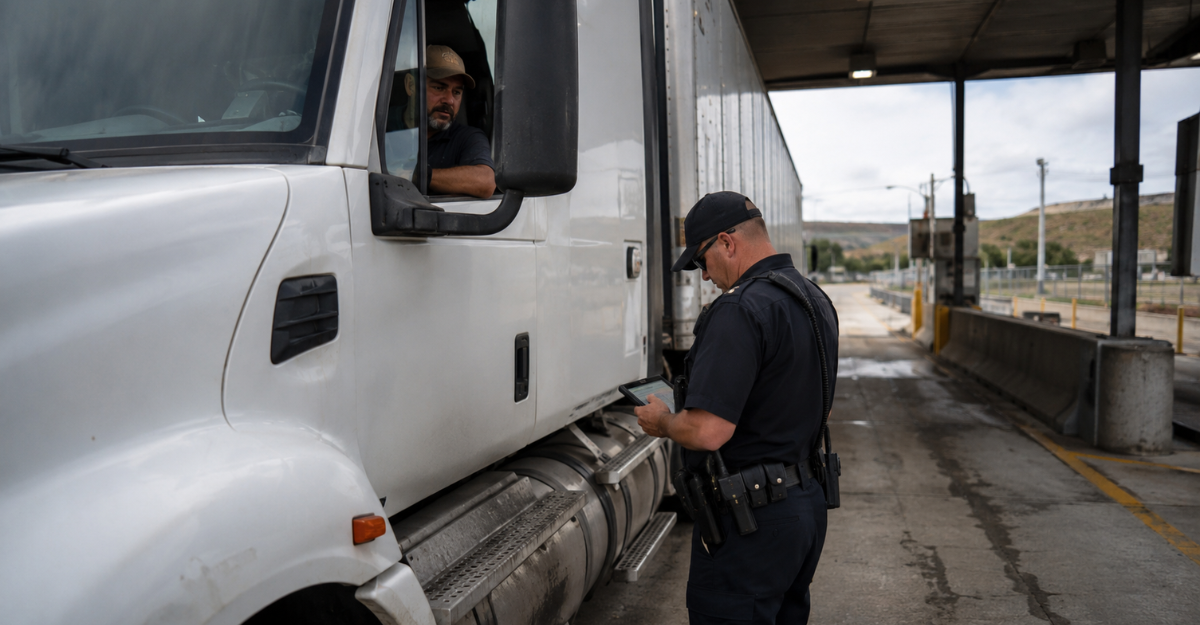
Enforcement officers have become more sophisticated in ELD inspection procedures since the mandate took effect. Current inspection protocols include verifying the device is on the registered list (not just that a device is installed), checking for data transfer capability (the device must be able to transmit data electronically to the inspector), reviewing the data for diagnostic and malfunction indicators (ELDs are required to flag their own operational problems), checking for unassigned driving time (time when the vehicle was moving but no driver was logged in), and comparing GPS data against the driver's recorded location data for consistency.
An ELD that is installed but cannot transfer data, or that shows persistent diagnostic codes, or that has significant blocks of unassigned driving time, will generate further scrutiny — and may result in a violation even though a device is physically present.
Penalties for Non-Compliance
ELD violations are assessed during roadside inspections and compliance audits. The penalty structure is tiered:
No ELD installed (or de-registered device): The driver is placed out of service for the remainder of the day — the truck does not move until the driver has completed the required off-duty time, and the carrier receives a violation. The fine ranges from $1,000 to $16,000 per violation depending on severity and whether the carrier has prior violations.
ELD malfunction not reported: If the ELD is malfunctioning and the driver has not reported the malfunction to the carrier within 24 hours and begun using paper logs as a backup, the driver can be cited. Carriers are required to resolve ELD malfunctions within 8 days of notification.
ELD tampering: Intentional tampering with an ELD — disabling the device, disconnecting it from the ECM, or using external devices to alter the data — is a separate and more severe violation. Tampering can result in fines of $5,000 or more per instance and impacts the carrier's safety rating.
Pattern violations in audits: During a compliance audit, FMCSA reviews the carrier's ELD records across all drivers. A pattern of violations — unassigned driving time, frequent malfunctions, missing data — can result in a proposed adverse safety rating or a conditional rating that requires the carrier to demonstrate corrective action within a defined period.
What Shippers Should Be Asking
Is the Carrier's ELD on the Registered List?
This is the most immediate question in 2026, given the recent device removals. A shipper can ask the carrier what ELD device they use and verify it against FMCSA's public registered device list. If the carrier's device was removed in the July 2026 action, the follow-up question is whether the carrier has completed the replacement before the September 8, 2026, deadline.
A carrier that is still running a de-registered device after the deadline is not a carrier that should be handling your freight — the risk exposure extends beyond the ELD violation to the broader question of whether the carrier manages compliance proactively or reactively.
What Is the Carrier's ISS Score?
The Inspection Selection System score is a FMCSA metric that determines how likely a carrier's trucks are to be pulled over for inspection. A carrier with a high ISS score — meaning its trucks are flagged for inspection more frequently — may have underlying HOS or ELD compliance issues that are generating elevated scrutiny. Shippers can ask carriers about their ISS score, their out-of-service rate, and their most recent compliance review results as part of a carrier evaluation process.
How Does the Carrier Handle ELD Malfunctions?
ELDs are electronic devices, and they malfunction. The question is not whether a carrier's ELDs will ever fail but whether the carrier has a defined protocol for handling failures. Best practices include immediate driver notification to dispatch, same-day switch to paper backup logs, repair or replacement within the 8-day FMCSA window, and documentation of the malfunction and resolution in the carrier's records.
A carrier that cannot articulate its ELD malfunction protocol is a carrier that has not thought through a scenario that FMCSA explicitly requires it to manage.

Does the Carrier Manage Unassigned Driving Time?
Unassigned driving time — periods when the vehicle was moving but no driver was logged into the ELD — is a red flag during inspections and audits. It can indicate drivers failing to log in, unauthorized vehicle use, or ELD configuration problems. Carriers with well-managed ELD programs have processes to review unassigned driving time daily and resolve discrepancies before they accumulate into an audit finding.
ELD Compliance and the Shipper-Carrier Relationship
ELD compliance is a baseline — a minimum standard that separates legal carriers from non-compliant ones. But for shippers evaluating carrier quality, ELD management reveals more than just compliance. It reveals operational discipline.
A carrier that runs current, properly maintained ELD devices, trains drivers on correct use, resolves malfunctions within the regulatory window, and proactively manages unassigned driving time is a carrier that applies the same discipline to everything else — vehicle maintenance, driver management, safety technology, and freight handling.
ELD compliance is not a differentiator. It is a filter. The differentiator is what a carrier does beyond compliance — how it uses the data ELDs generate to improve driver scheduling, reduce fatigue-related incidents, and deliver freight within the hours of service constraints that every driver and every shipper must operate within.
Frequently Asked Questions
What is the ELD mandate? The ELD mandate is a federal rule requiring most commercial motor vehicle drivers who must keep records of duty status to use FMCSA-registered electronic logging devices instead of paper logbooks. The rule was finalized in 2015 and fully enforced since December 2019. ELDs automatically record driving time by connecting to the vehicle's engine, preventing the falsification of hours of service records.
Who is exempt from the ELD mandate? Five categories are exempt: drivers operating under the short-haul exception (within 150 air miles of their work reporting location), drivers using paper RODS for 8 or fewer days in a 30-day period, drivers of vehicles manufactured before model year 2000, drivers in drive-away-tow-away operations, and certain agricultural carriers with HOS exemptions within a 150 air-mile radius.
What happened to ELDs removed from the FMCSA registered list in 2026? On July 9, 2026, FMCSA removed multiple ELD models from its registered device list after determining they no longer met technical specifications. Carriers using those devices have until September 8, 2026, to replace them with a compliant device. After that deadline, operating with a de-registered ELD is treated the same as operating without an ELD — the driver can be placed out of service and the carrier receives a violation.
What are the penalties for ELD non-compliance? Penalties range from the driver being placed out of service (the truck does not move for the remainder of the day) to fines of $1,000 to $16,000 per violation. ELD tampering carries fines of $5,000 or more. During compliance audits, a pattern of ELD violations can result in an adverse safety rating for the carrier.
What is the eDVIR rule? The electronic Driver Vehicle Inspection Report rule, finalized February 19, 2026, confirms that pre-trip and post-trip vehicle inspection reports may be created and maintained electronically. The rule also requires ELD devices to sync with FMCSA's new data gateway by January 1, 2027, enabling remote compliance auditing of both HOS and DVIR records.
How can shippers verify a carrier's ELD compliance? Shippers can ask which ELD device the carrier uses and verify it against FMCSA's public registered device list. Additional indicators include the carrier's ISS score, out-of-service rate, and most recent compliance review results. Asking about the carrier's ELD malfunction protocol and unassigned driving time management process reveals whether compliance is proactive or reactive.
other blog posts
.webp)

%2520(1).webp)


%2520(1).webp)